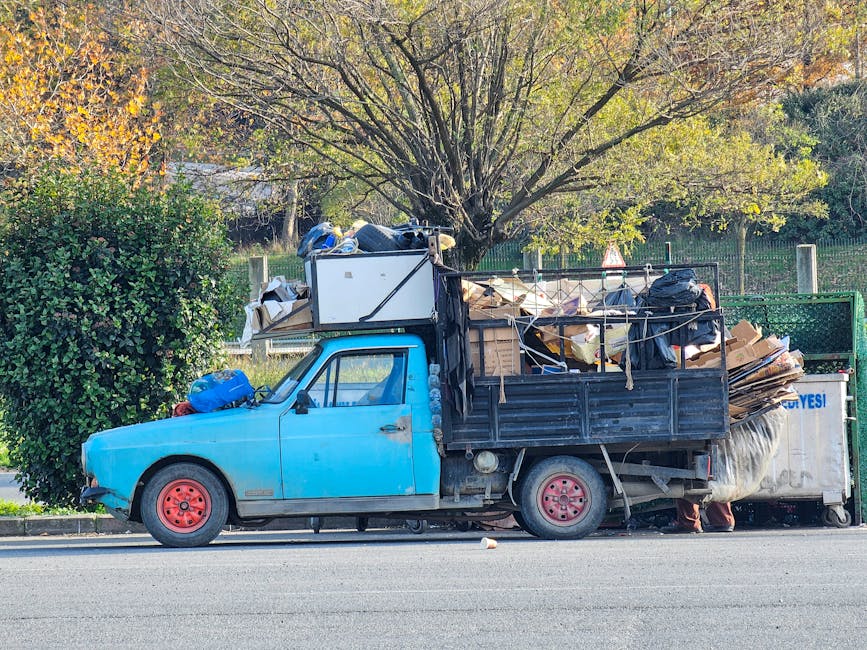
St Johns Wood High Street bulky rubbish pickup and shop clearance

If you are trying to clear a shop unit, tidy a stockroom, or get rid of bulky waste on a busy stretch of St Johns Wood High Street, the job can feel bigger than it looks. One old display cabinet, a few broken chairs, packaging, and leftover fixtures can quickly turn into a proper pile. And in a live retail area, that pile is not just inconvenient - it gets in the way, looks untidy, and can slow the day down.
This guide explains St Johns Wood High Street bulky rubbish pickup and shop clearance in plain English: what it covers, how it works, who it suits, what to avoid, and how to plan it without turning the place into a half-finished mess. We will also cover practical booking tips, common compliance issues, and the small details that make a clearance run smoothly. Truth be told, that is usually what people want most: less stress, fewer surprises, and a clean space by the end of the day.
Why St Johns Wood High Street bulky rubbish pickup and shop clearance Matters
Shop clearances are not just about removing clutter. On a high street, every square metre matters. A blocked rear corridor, a crowded stockroom, or a pile of unwanted fittings near the entrance can make trading awkward very quickly. Customers notice it. Staff feel it. Delivery crews definitely notice it.
Bulky rubbish pickup matters because bulky items are often the hardest waste stream to handle in-house. Think about broken shelving, worn sofas in a waiting area, fridges, old tills, display plinths, laminate counters, cardboard bulk, or packaging from a refit. One person can sometimes shift a few bags, but bulky waste usually needs planning, lifting discipline, and the right vehicle capacity.
There is also the simple visual side of things. A clean shopfront and a tidy clearance send a strong signal: the business is organised, open, and on top of its space. That matters whether you are handing keys back, preparing for a new tenant, or just trying to keep trading during a seasonal reset.
Expert summary: The best bulky rubbish pickup is the one that removes waste quickly, keeps access clear, protects the property, and avoids unnecessary handling. For retail spaces, the real win is not just disposal - it is continuity.
For businesses with mixed waste, it also helps to separate what should go to general waste, what can be recycled, and what needs special handling. If you are dealing with a broader commercial clear-out, it can be worth looking at business waste removal alongside the clearance itself.
How St Johns Wood High Street bulky rubbish pickup and shop clearance Works
In practical terms, the process is usually straightforward, but the good jobs are the ones where the planning happens before the lifting starts. A reliable clearance service will normally assess the volume of waste, the type of items involved, access to the property, and any restrictions around timing or loading.
Here is the typical flow:
- Initial assessment - You describe what needs removing. A good description includes item types, estimated volume, floor level, and whether anything is awkward, fragile, or heavy.
- Price discussion - Costs are usually based on load size, labour, disposal complexity, and whether specialist items are involved. For clarity on the commercial side, many readers start with the site's pricing and quotes information.
- Arrival and access check - The crew checks the route in, the loading point, and any time-sensitive issues such as deliveries, customer traffic, or building access controls.
- Sorting and removal - Items are loaded in a practical order: bulky first, then smaller loose waste, then any recyclables or separated materials.
- Transport and disposal - Waste is removed for appropriate processing, recycling, or disposal. Responsible handling matters, especially with mixed commercial waste.
- Final sweep - The team should leave the cleared area ready for the next stage, whether that is re-merchandising, refurbishment, or handover.
For furniture-heavy shop clearances, you may also need a more specific approach. In that case, the pages on furniture clearance and furniture disposal are useful because they match the practical reality of shop fittings, display units, chairs, and shelving.
One small but important point: access on a high street often shapes the whole job. If the front entrance is narrow, the back route is awkward, or parking is tight, the team needs to know that early. It sounds obvious. People still forget it. Then everybody is standing around with a heavy cabinet and a slightly worried look.
Key Benefits and Practical Advantages
A proper shop clearance does more than remove waste. It solves a few problems at once, which is why it is often the least glamorous part of a business move but one of the most valuable.
- Faster turnaround - A coordinated pickup clears space in one visit instead of several small trips.
- Less disruption - Staff can keep working around a planned clearance rather than improvising around clutter.
- Better presentation - A clean retail environment feels more professional, even during a refit or closing-down sale.
- Improved safety - Removing trip hazards, stacked items, and unstable shelving reduces the chance of accidents.
- Smarter space use - You can see what you actually have once the surplus goods and rubbish are gone.
- More predictable disposal - A service that handles sorting and transport helps avoid last-minute dump runs.
There is also a sustainability angle. Not every bulky item needs to end up in general waste, and a thoughtful clearance plan should look for reuse or recycling where possible. If that matters to your business reputation - and it increasingly does - it is worth reading the company's recycling and sustainability approach before you book.
In real life, the biggest advantage is often mental space. When the stockroom is full of old fittings, every task feels harder. Clear it once and the whole unit breathes a bit easier. Simple as that.
Who This Is For and When It Makes Sense
This kind of service is useful for a wide range of people, not just shop owners at the end of a lease.
- Retail shops clearing old shelves, fixtures, packing materials, or redundant stockroom items
- Cafes and takeaway units removing old appliances, worn furniture, or back-of-house waste
- Pop-up retailers who need a fast clean-out after a short-term lease ends
- Landlords and managing agents preparing a unit for a new tenant
- Fit-out teams dealing with leftover materials after a shop refit
- Local businesses that need one-off bulky waste removal rather than an ongoing contract
It makes sense when waste is too large, too awkward, or too time-sensitive to deal with in-house. It also makes sense when staff time would be better spent on trading, customer service, or getting the unit back into shape. Why spend half a day wrestling with broken furniture when someone with the right vehicle and loading plan can do it in one go?
For more general property clear-outs, readers sometimes compare the service against office clearance or home clearance, but a shop unit has its own rhythm. The access is different. The timing is different. The pressure is different too.
Step-by-Step Guidance
If you want a smoother clearance, the best approach is to treat it like a short project, not a random uplift. That keeps the day calmer and usually saves money as well.
1. Walk the space first
Do a proper walk-through of the shop, stockroom, cellar, and rear access if there is one. Make note of the biggest items, the heaviest items, and anything that might need disassembly. Old counter units and built-in shelving can look manageable until you actually try to move them.
2. Separate what stays from what goes
This step saves time on site. Label items clearly if there is any risk of confusion. Keep useful stock, paperwork, and equipment away from general waste. It sounds basic, but that one habit prevents so many awkward mistakes.
3. Flag any special items early
Fridges, freezers, appliances, and certain electrical items may need separate handling. If your clearance includes chilled display units or back-of-house equipment, check the relevant service pages first, including fridge and appliance removal.
4. Ask about access and timing
On a high street, timing can matter more than people expect. Early mornings, quieter trading windows, or pre-opening slots may reduce disruption. If there is loading access at the rear, make sure it is genuinely usable and not just theoretically available.
5. Confirm the disposal route
Ask how the waste will be handled after collection. Responsible removal should not be vague about what happens next. If there are hazardous or awkward materials involved, check hazardous waste disposal guidance before mixing items into the load.
6. Book the right level of help
Some jobs are a quick uplift. Others are a full clearance with dismantling, sorting, and multiple load categories. Be honest about the size of the task. Under-briefing the crew is a classic error and, to be fair, it usually backfires on the day.
7. Do a final sweep and handover
Once the removal is complete, check corners, storage ledges, under counters, and service areas. Shop clearances often leave behind small but important bits: cable ties, fixings, loose packaging, or one last box tucked behind a cabinet. That last look always matters.
Expert Tips for Better Results
A few practical habits make a big difference, especially on a busy commercial street where time and access are both limited.
- Photograph the waste before booking so the scope is clear. That helps avoid surprises and gives everyone a better sense of load size.
- Group similar items together - furniture with furniture, packaging with packaging, appliances together if possible. It speeds loading and sorting.
- Leave the route clear from the waste pile to the exit. Every extra step slows the job and increases handling risk.
- Disassemble what you safely can before collection if it will genuinely reduce volume. Do not take apart anything load-bearing or awkward without the right tools.
- Keep staff briefed so nobody accidentally moves items that have already been separated for removal.
- Plan around trading hours and deliveries. The less crossover, the better.
One small human tip: keep a marker pen and a few labels nearby. They save arguments later. More than once, a simple label has prevented a "who was keeping that?" moment when a room is half emptied and everyone's a bit tired.
If the clearance overlaps with a larger property project, you may also need help with construction-related waste. In that case, the service information on builders waste clearance can sit alongside the shop clearance plan very neatly.
Common Mistakes to Avoid
The most common problems are rarely dramatic. They are small planning gaps that compound into delays, extra labour, or avoidable stress.
- Booking too late - especially risky if you are tied to a lease deadline, refit, or handover date.
- Underestimating volume - a few bulky items in the corner can conceal a much larger clearance job.
- Not checking access - loading bay limits, steps, narrow corridors, and parking restrictions can change the whole plan.
- Mixing special waste with general rubbish - this can complicate disposal and may not be appropriate.
- Leaving loose items everywhere - small waste scattered around a unit takes longer to collect than one tidy stack.
- Forgetting what needs to stay - signage, fixtures, keys, and documents can easily get lost in the shuffle.
One thing people often overlook is the timing of staff sign-off. If the manager is not available to confirm what is staying and what is going, the crew can end up waiting. Not ideal. It is one of those tiny delays that somehow feels bigger when you are trying to finish by lunchtime.
Tools, Resources and Recommendations
You do not need a warehouse of equipment to prepare for a shop clearance, but a few simple tools make the process far smoother.
- Labels or coloured tape for marking keep items and remove items
- Marker pen and note sheets for quick inventory notes
- Basic hand tools for safe disassembly where appropriate
- Gloves and sturdy footwear for anyone helping with the pre-clearance sort
- Boxes or tubs for small items that must be separated from waste
- Mobile photos for sharing accurate visuals before the booking
From a service-selection point of view, the most useful resources on this site are the pages that explain different waste categories and customer expectations. Depending on what your shop is clearing, it can help to review waste removal, pricing and quotes, and the company's insurance and safety information.
For specific heavy household-style items that sometimes appear in retail units - waiting-room furniture, old display sofas, tired seating, or reception chairs - the pages on mattress and sofa disposal can also be surprisingly useful as a reference point for item handling.
Law, Compliance, Standards, or Best Practice
For commercial waste, the safest approach is to treat compliance as part of the job rather than an afterthought. You do not need to become an expert in waste law to make a sensible choice, but you should expect a provider to handle waste responsibly and to be clear about what they can and cannot take.
In the UK, businesses generally have a duty to manage waste properly and use legitimate disposal routes. In plain terms, that means keeping records where needed, separating obvious problem materials, and avoiding any arrangement that looks vague or unofficial. If a clearance company is unclear about the disposal process, that is a red flag. Not always a huge one, but a red flag all the same.
Best practice usually includes:
- clear descriptions of the waste before collection
- safe lifting and handling on site
- appropriate treatment of appliances and special items
- careful separation of hazardous or sensitive materials
- transparent pricing and service terms
- appropriate care for occupied premises and shared access areas
If you are clearing paperwork or sensitive office material at the same time, consider whether confidential disposal is needed. A mixed commercial clearance often benefits from a separate approach to documents, and the page on confidential shredding is relevant in those situations.
It is also sensible to check the company's health and safety policy and service terms before booking. That is not about being difficult; it is about making sure the job is carried out properly, especially when lifting, access, and customer safety are all in play.
Options, Methods, or Comparison Table
There are a few ways to deal with bulky rubbish and shop waste. The best one depends on time, volume, access, and how much disruption you can tolerate.
| Option | Best for | Strengths | Limitations |
|---|---|---|---|
| Professional bulky rubbish pickup | Fast removal of mixed shop waste and large items | Quick, convenient, minimal lifting for staff | Needs good brief, access, and accurate scope |
| Phased in-house clear-out | Small volumes over several days | Spreads the workload | Can drag on and disrupt trading |
| Skip hire | Longer projects with ongoing waste generation | Useful for steady disposal during works | Needs space, permits may be relevant, loading can be awkward |
| DIY multiple tip runs | Very small, manageable loads | Flexible if you already have a suitable vehicle | Time-consuming, labour-heavy, not ideal for bulky fittings |
If you are trying to decide between a clearance and a skip-style approach, the guidance on what can go in a skip can help clarify the practical differences. That said, for shop units with awkward furniture and limited access, a pickup service is often the easier route.
And yes, sometimes the simplest option really is the best one. A clear-out is one of those jobs that rewards less fuss, not more.
Case Study or Real-World Example
Imagine a small independent shop on St Johns Wood High Street that is closing for a short refurbishment. The team has old wall units, a reception counter, a couple of damaged chairs, stockroom packaging, and several loose items that have built up over years. Nothing extreme, but enough to make the unit feel cramped and a bit tired.
The first mistake they nearly make is trying to deal with everything one evening after closing. The second is underestimating how much space the stripped-out fittings actually occupy once stacked. By the time the managers stop, there is no clear route to the door. That is the moment when stress starts climbing.
Instead, they spend an hour categorising items before booking. Keep items are boxed and labelled. Waste is grouped by type. A couple of awkward pieces are flagged as needing extra handling. The clearance crew arrives early, removes the bulky items in a controlled order, and leaves the sales floor ready for the refit crew. No drama. A slightly dusty floor, maybe, but that is normal.
The real benefit was not just speed. It was confidence. Staff knew what was going, what was staying, and when the space would be usable again. For a high street business, that calm matters a lot more than people sometimes admit.
Practical Checklist
Use this before your pickup or shop clearance day.
- Confirm exactly which items need removing
- Separate waste from stock, paperwork, and equipment
- Measure or estimate the largest items
- Check access points, stairs, loading space, and parking constraints
- Identify anything that needs special handling, such as appliances or hazardous material
- Photograph the waste pile for reference
- Choose a time that causes the least disruption
- Make sure someone on site can approve the final scope
- Keep a clear route to the exit
- Do a final sweep for small items after clearance
Quick takeaway: if you prepare well, the pickup is usually faster, tidier, and less expensive than scrambling on the day. Simple prep pays off.
Conclusion
St Johns Wood High Street bulky rubbish pickup and shop clearance is most effective when it is planned with the space, the access, and the business timetable in mind. That is the real trick. Not just removing items, but doing it in a way that keeps the shop operational, the surroundings tidy, and the team out of unnecessary chaos.
Whether you are dealing with a small stockroom clear-out, a full retail refit, or a unit handover, the best results usually come from clear communication, accurate item lists, and a sensible disposal plan. If you combine that with responsible handling and a little early organisation, the whole job becomes much more manageable.
Get a free quote today and see how much you can save.
And if you are already staring at that awkward pile of old fittings, take a breath. It is fixable. Most of these jobs are. One tidy clearance later, the place feels lighter - which is a nice moment, honestly.
Frequently Asked Questions
What is included in St Johns Wood High Street bulky rubbish pickup and shop clearance?
It usually includes the removal of large or awkward items from a retail or commercial unit, such as shop fittings, shelving, furniture, packaging, and mixed bulky waste. The exact scope depends on access, item type, and the amount to be cleared.
How do I know whether I need a full shop clearance or just a bulky item pickup?
If you only have a few large pieces, a bulky pickup may be enough. If you are clearing stockrooms, counters, shelving, fixtures, or a wider mix of waste, a full shop clearance is usually the better fit.
Can shop clearances be done outside trading hours?
Often, yes. Many businesses prefer early mornings, evenings, or quieter windows to reduce disruption. It is worth discussing timing in advance, especially on a busy high street.
What happens to the waste after collection?
Responsible providers sort, transport, and dispose of waste through proper channels, with recycling where suitable and careful handling of special items. If something is hazardous or sensitive, it should be treated separately.
Do I need to prepare the waste before the crew arrives?
A bit of preparation helps a lot. Separate items that are staying, group similar waste together where possible, and clear a route to the exit. You do not need to do the heavy lifting yourself.
Can you remove old furniture and display units from a shop?
Yes, that is one of the most common parts of a commercial clearance. Old counters, chairs, tables, shelving, and display fixtures are all typical examples.
What if my clearance includes a fridge or other appliance?
Appliances should be flagged early because they may need different handling from general bulky waste. For those items, the appliance-specific service information is worth reviewing before booking.
Is hazardous waste part of a normal shop clearance?
Not usually. If you have anything potentially hazardous, keep it separate and mention it before the job is booked. Mixed loads with special items should be planned carefully.
How much notice do I need to give?
That depends on the size of the job and how busy the schedule is. Smaller pickups may be arranged fairly quickly, but larger shop clearances are best booked with enough time to plan access and staffing.
What information helps most when asking for a quote?
Photos, item lists, floor level, access details, and any time restrictions are the most helpful. The more accurate the brief, the easier it is to give a sensible estimate.
Can you help with paperwork, stock, and confidential items as well?
Some clearances involve more than waste. If documents or sensitive materials are included, keep them separate and ask about confidential handling rather than mixing them into general rubbish.
What is the biggest mistake people make with shop clearances?
Usually it is underestimating access or volume. A small-looking pile can turn into a surprisingly large job once items are moved. A quick walk-through before booking prevents most of that trouble.