Commercial Waste Removal St Johns Wood — Recycling & Sustainability
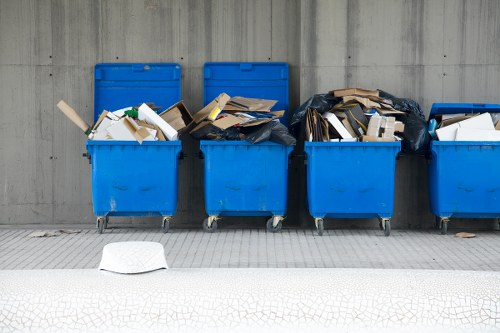 Commercial Waste Removal St Johns Wood is committed to providing an eco-friendly waste disposal service that supports the local community and the City of Westminster's broader sustainability goals. Our approach to sustainable rubbish management in St Johns Wood combines clear on-site segregation, partnerships with reuse organisations and charities, and investment in low-impact transport to ensure commercial rubbish removal in St Johns Wood reduces landfill and increases resource recovery.
Our recycling ambition for local businesses
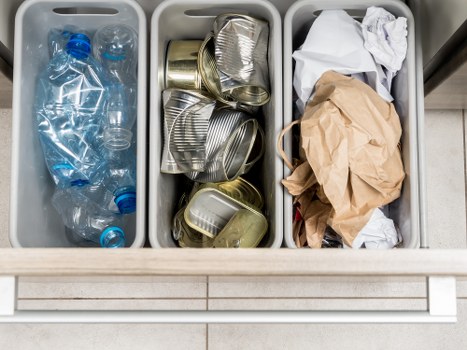
We set a measurable recycling percentage target to drive continuous improvement: a minimum 65% recycling rate for commercial waste across our St Johns Wood contracts by 2030, moving towards 75% where feasible. This recycling percentage target reflects both the practical constraints of mixed commercial streams and the ambition to align with London boroughs' waste strategies. To achieve this we track diversion rates, conduct regular waste audits and report progress to clients in plain terms.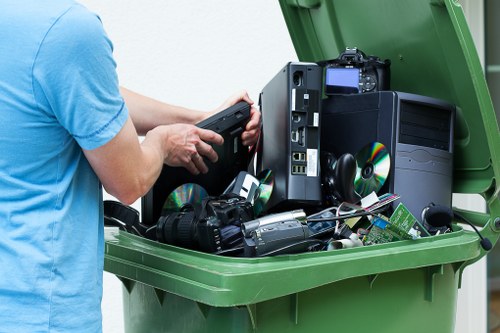 The boroughs' approach to waste separation underpins our operations: the City of Westminster encourages segregated streams for dry recycling (paper, cardboard, plastics), glass, food/organic waste and residual refuse. We work within that framework to provide clear labelled containers and staff training so businesses in St Johns Wood can smoothly follow the local separation model. Segregation at source is the single most effective measure to boost recycling rates and reduce contamination of recyclable loads.
Local transfer stations and processing hubs
We route collected materials to nearby transfer stations and processing centres to minimise haul distances and turnaround times. Typical local transfer stations and facilities we use include Westminster transfer facilities and north-west London processing hubs that accept sorted recycling streams. Where specialised streams are concerned (e.g., WEEE, carpets, construction waste) we liaise with dedicated treatment sites to ensure compliant processing.Key recyclable streams we manage include:
- Paper and cardboard — baled and sent to paper mills
- Plastics and mixed containers — sorted and sent to reprocessing lines
- Glass — cleaned and crushed for remanufacture
- Food and organic waste — sent to anaerobic digestion/composting facilities
- WEEE and furniture — assessed for repair, reuse or specialist recycling
Using local transfer stations reduces unnecessary mileage, supports the circular economy and improves traceability for eco-friendly waste disposal — ensuring items reach the right processing stream instead of landfill.
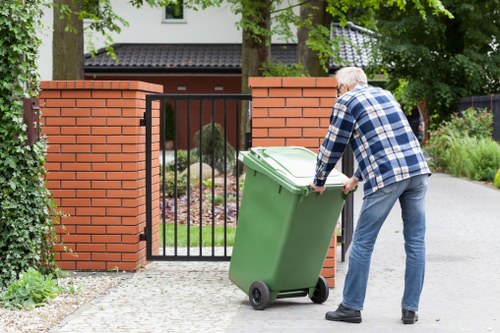 We have developed formal partnerships with charities and reuse organisations to maximise reuse before recycling. In St Johns Wood many items from commercial clearances — furniture, textiles, office equipment and working electronics — can be redirected to charities for refurbishment and resale. Our charity partners include national and community organisations that operate local outlets and social enterprises. These collaborations extend the life of products, create social value and reduce the carbon footprint associated with new purchases.
On-site practices are central to a sustainable rubbish area: we provide clear containerisation, staff training sessions and regular waste audits so teams know how to separate materials properly. Practical measures such as compact balers for cardboard, lockable storage for reuse items and scheduled segregation checks all contribute to lower contamination and higher recycling capture rates.
For more complex commercial waste streams — construction and demolition, hazardous waste, or polycoat materials — we use certified treatment partners and maintain full documentation. Compliance and transparency are core to our promise: transfer notes, waste transfer documentation and audit trails accompany every consignment leaving St Johns Wood.
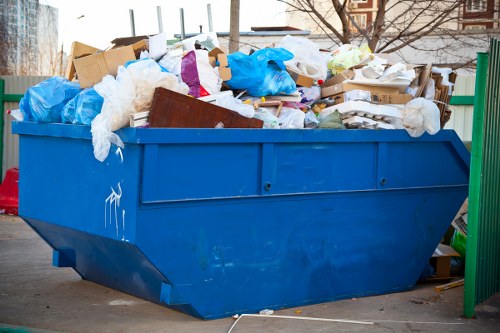 Low-carbon vans and smarter logistics are a practical way we reduce emissions linked to commercial rubbish removal St Johns Wood. We operate an increasingly electric and hybrid light commercial fleet complemented by Euro 6 diesel vehicles for heavier loads. Where streets and access permit, we deploy cargo bikes and electric-assisted trolleys for small collections and last-mile transfers — an approach that lowers local air pollution and noise in residential parts of St Johns Wood.
Benefits of the low-carbon fleet include:
- Reduced CO2 emissions and improved air quality
- Quieter operations in sensitive residential streets
- Lower operating costs over time through route optimisation
 Measurement and continuous improvement complete our sustainability cycle. We provide periodic reports showing diversion rates, tonnages sent to reuse or recycling, and progress against the recycling percentage target. Regular engagement with clients and local stakeholders helps refine collection frequencies, container sizes and segregation practices so the sustainable rubbish area evolves with business needs.
Working together: creating a genuinely sustainable commercial waste ecosystem in St Johns Wood depends on collaboration between businesses, collection services, transfer stations and charities. By prioritising reuse, targeting higher recycling percentages, routing through local processing facilities and investing in low-carbon vans we reduce the environmental impact of commercial waste removal in St Johns Wood while supporting a resilient, circular local economy.
